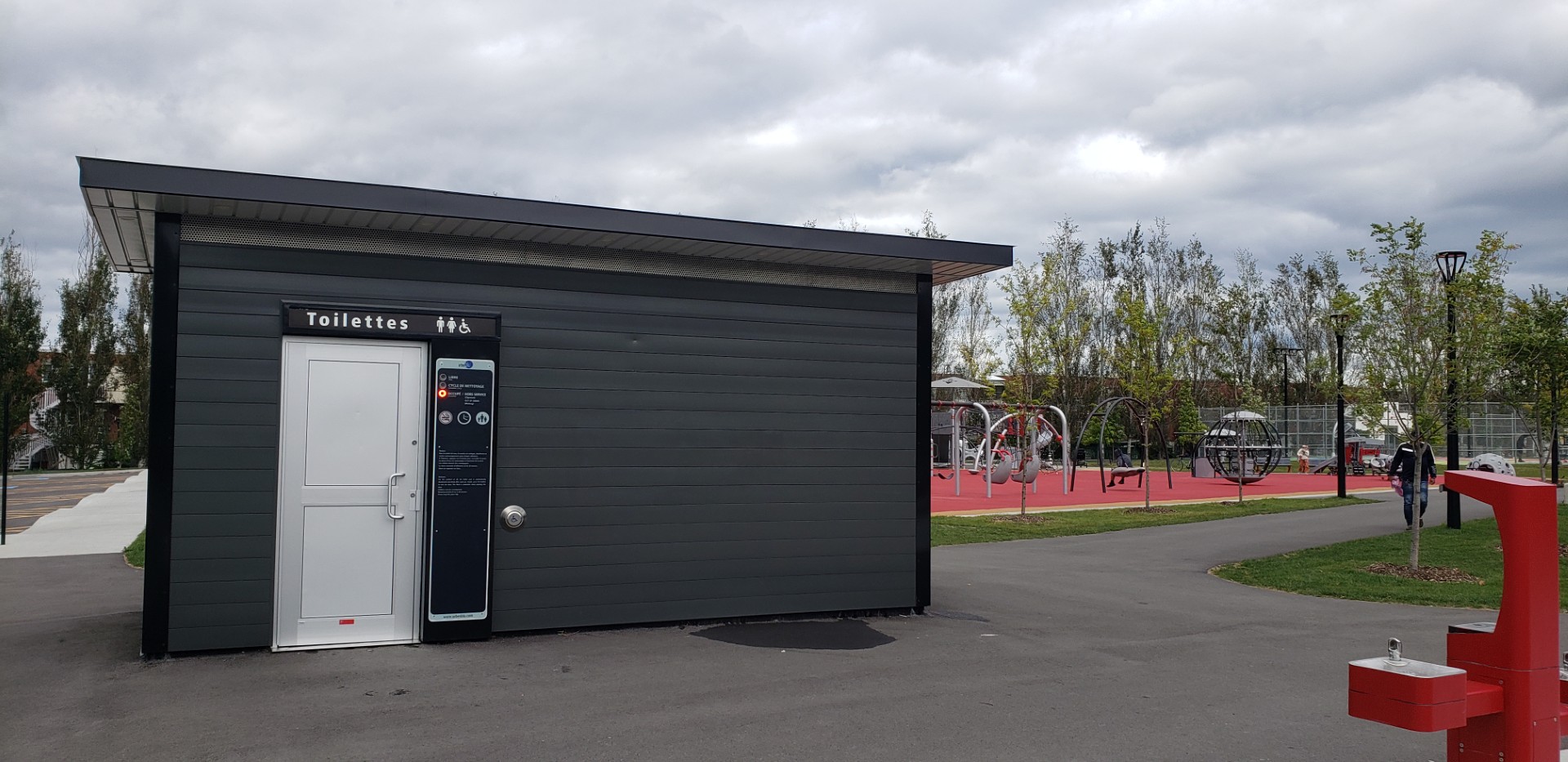
2026 Comparison: Which Type of Public Restroom Is Best for Your Municipality?
Introduction
In 2026, municipalities have access to a wide range of restroom solutions for parks, downtowns, beaches, and natural spaces. However, not all solutions are equal—and a poor choice can lead to high costs, vandalism, citizen complaints, and a degraded user experience.
Below is a clear comparison to help municipalities select the most appropriate option.
1. Chemical (portable) toilets
Advantages
- Fast deployment
- Low upfront cost
- No infrastructure required
Limitations
- Poor user experience
- Odor issues
- Very frequent servicing
- Not suited for high traffic
- Accessibility challenges
- Negative city image
Conclusion
A short-term solution, but inadequate for quality public spaces.
2. Traditional custom-built restrooms
Advantages
- Customizable design
- Architectural integration possible
- Durable if properly built
Limitations
- Long and costly construction
- Dependence on multiple contractors
- Complex maintenance
- Vulnerable in cold climates if insulation is insufficient
Conclusion
A viable option, but higher acquisition cost and less efficient long-term performance without optimized maintenance.
3. Standard prefabricated restroom buildings
Advantages
- Quick installation
- Predictable pricing
- Relocatable if needed
- Reduced municipal coordination
Limitations
- Variable durability by manufacturer
- Limited smart features
- Not always vandal-resistant
- Sometimes limited design flexibility
Conclusion
A reasonable compromise, but material quality and long-term durability must be carefully evaluated.
4. Smart public restrooms (self-cleaning & four-season)
Advantages
- Self-cleaning between uses
- Integrated heated slab
- Year-round operation
- Anti-vandalism structure
- Low maintenance requirements
- Enhanced safety (timers, lighting, automated locking)
- Universal accessibility
- High-quality citizen experience
- Purchase cost recovered quickly through annual maintenance savings (~$25,000/year)
Limitations
- Higher upfront investment than temporary solutions
- Requires electrical power
Conclusion
The most durable, reliable, and cost-effective long-term solution.
Conclusion
In 2026, citizen expectations have evolved: cleanliness, accessibility, safety, and service continuity are no longer optional.
Smart public restrooms now represent the most comprehensive solution for municipalities seeking to modernize their sanitary infrastructure.